Housing Price Index Q3/2026: "Rising Interest Rates Are Fatal"


“The latest rise in interest rates is fatal. […] But the real bad news hits new construction. Here it is not prices that are falling, it is realisation of new buildings that is collapsing,” says Dr Reiner Braun in his latest commentary on the Q3/2026 data of the empirica housing price index. This time, purchase prices are rising more strongly, while rents continue their steady rise regardless.
Current figures on the Housing Price Index Q3/2026
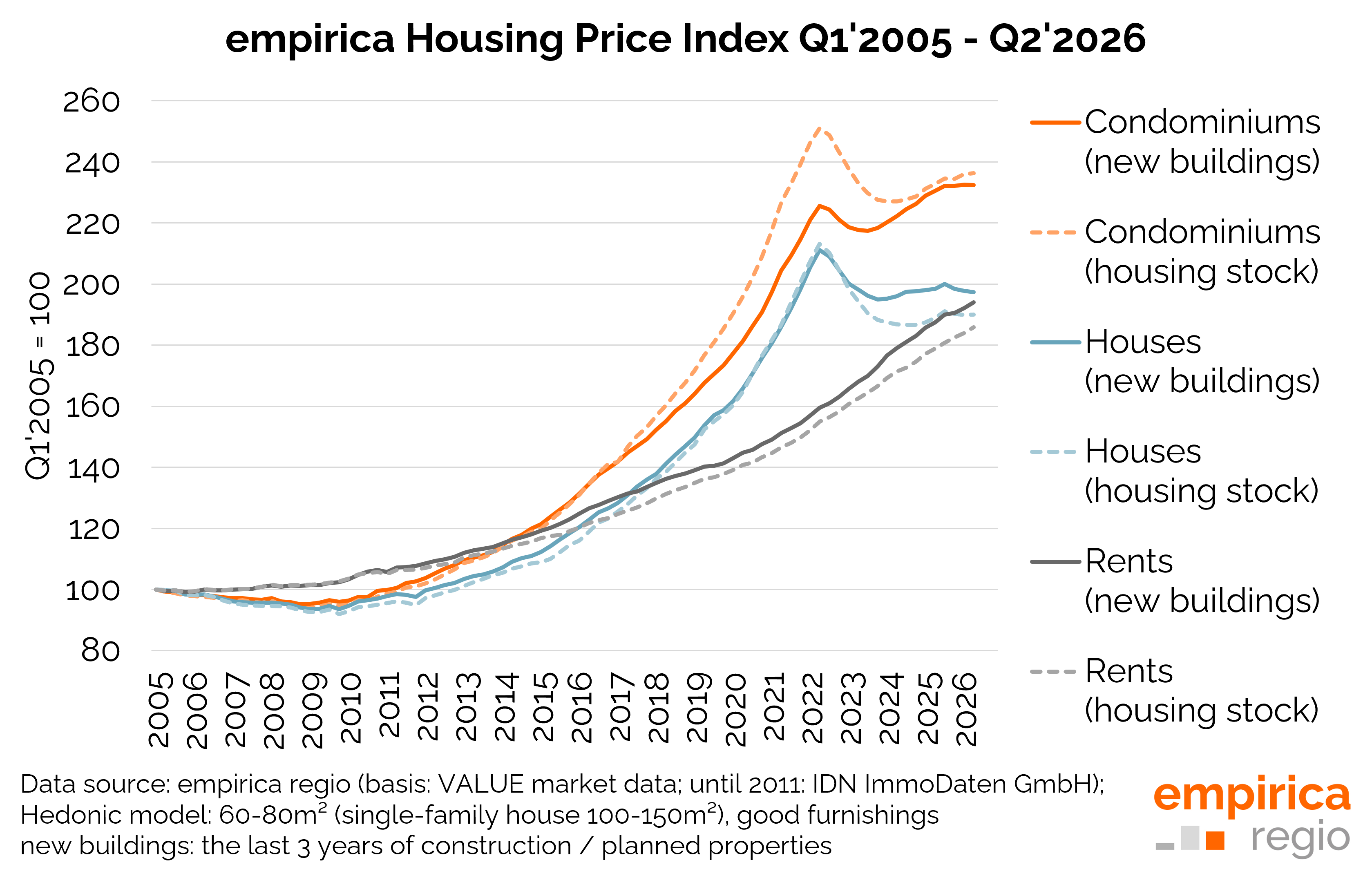
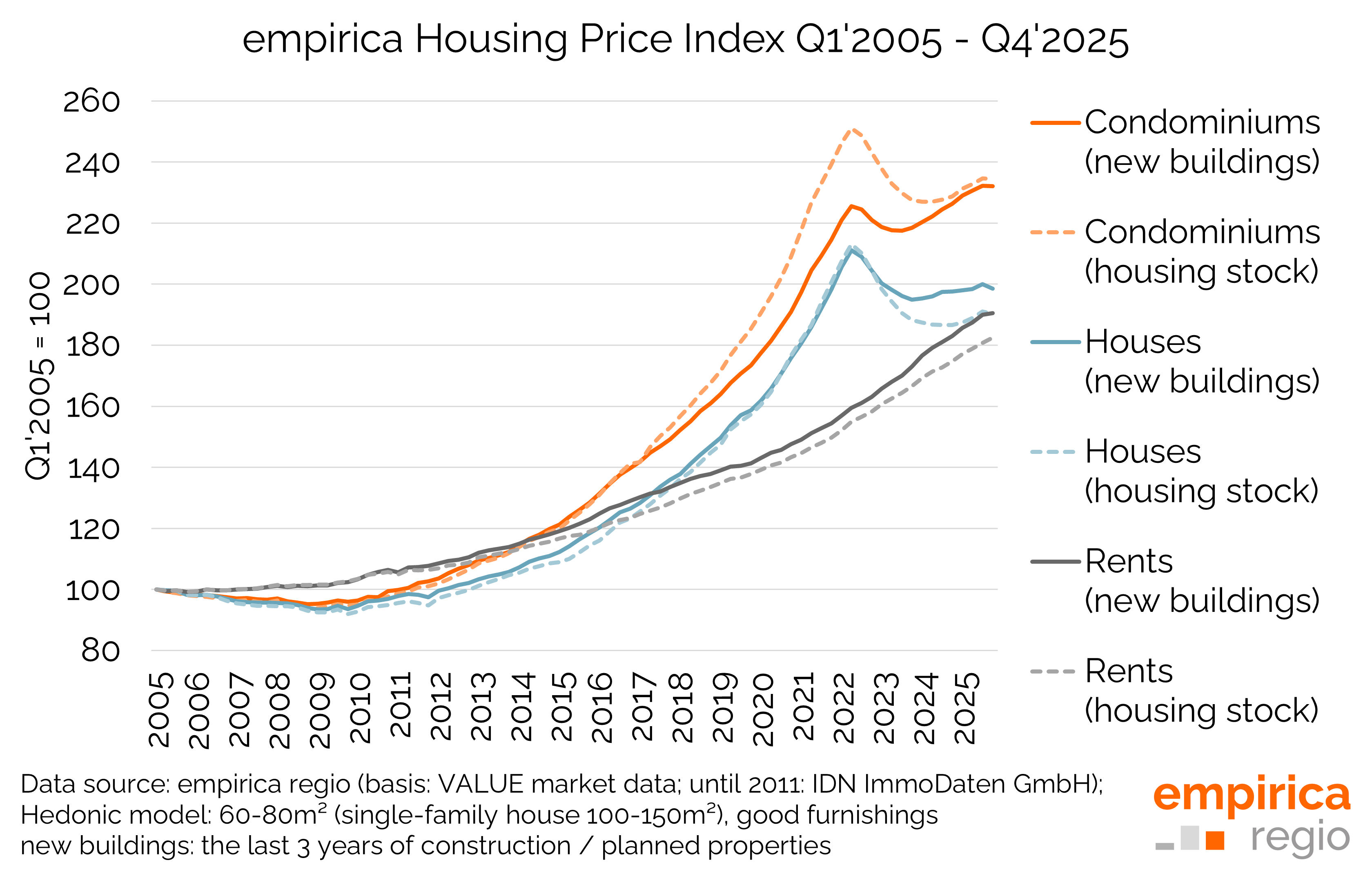
In contrast to the previous housing price index, new-build prices for owner-occupied flats (1.1%) and one- and two-family houses (2.2%) as well as rents (1.6%) all rise noticeably this time. Compared with the same quarter of the previous year (Q3/2025), prices are up in all three segments: the index for owner-occupied flats rises by 1.2%, for one- and two-family houses by 0.9% and for rents even more strongly by +3.8%.
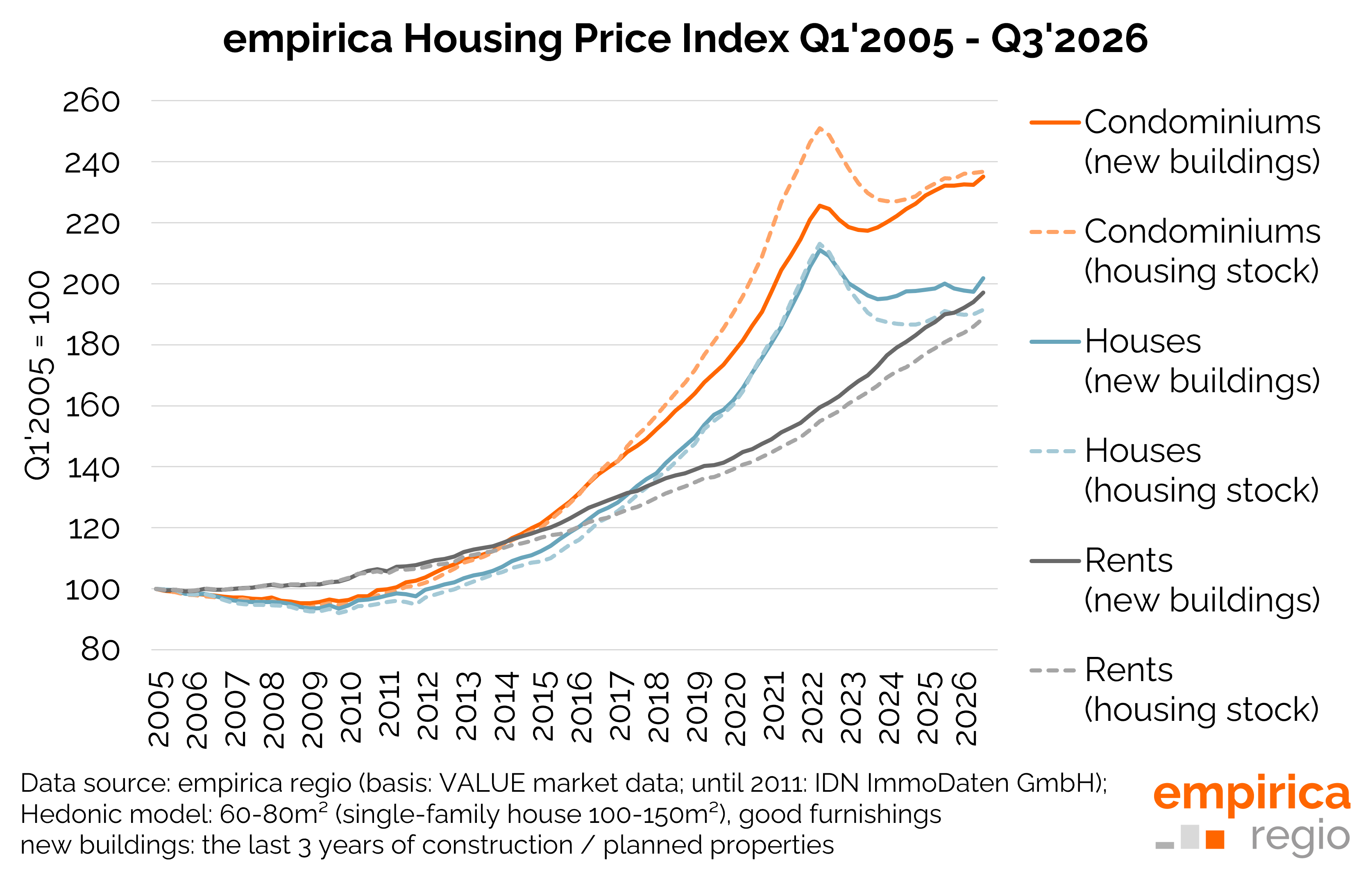
For existing properties, the indices for one- and two-family houses (EZFH, 0.7%) and owner-occupied flats (ETW, 0.2%) are nearly stagnant. Compared with the same quarter of the previous year (Q3/2025), ETW show a somewhat larger increase of 0.9%, while EZFH record a virtual standstill with a change of 0.2%. The price level from the beginning of 2022 remains within reach, especially for ETW, though the catch-up process will still take time.
The index for existing rental flats continues to rise steadily, up 1.6% on the previous quarter. The 3.8% increase compared with Q3/2025 shows, in contrast to ETW and EZFH, an unbroken and constant trend with no sign of a turnaround.
Data basis Housing Price Index
All empirica housing price index data can be obtained as individual data sets or via database access from empirica regio. Further figures can be found in the quarterly publication on the index.
The current commentary by Reiner Braun: The latest rise in interest rates is fatal
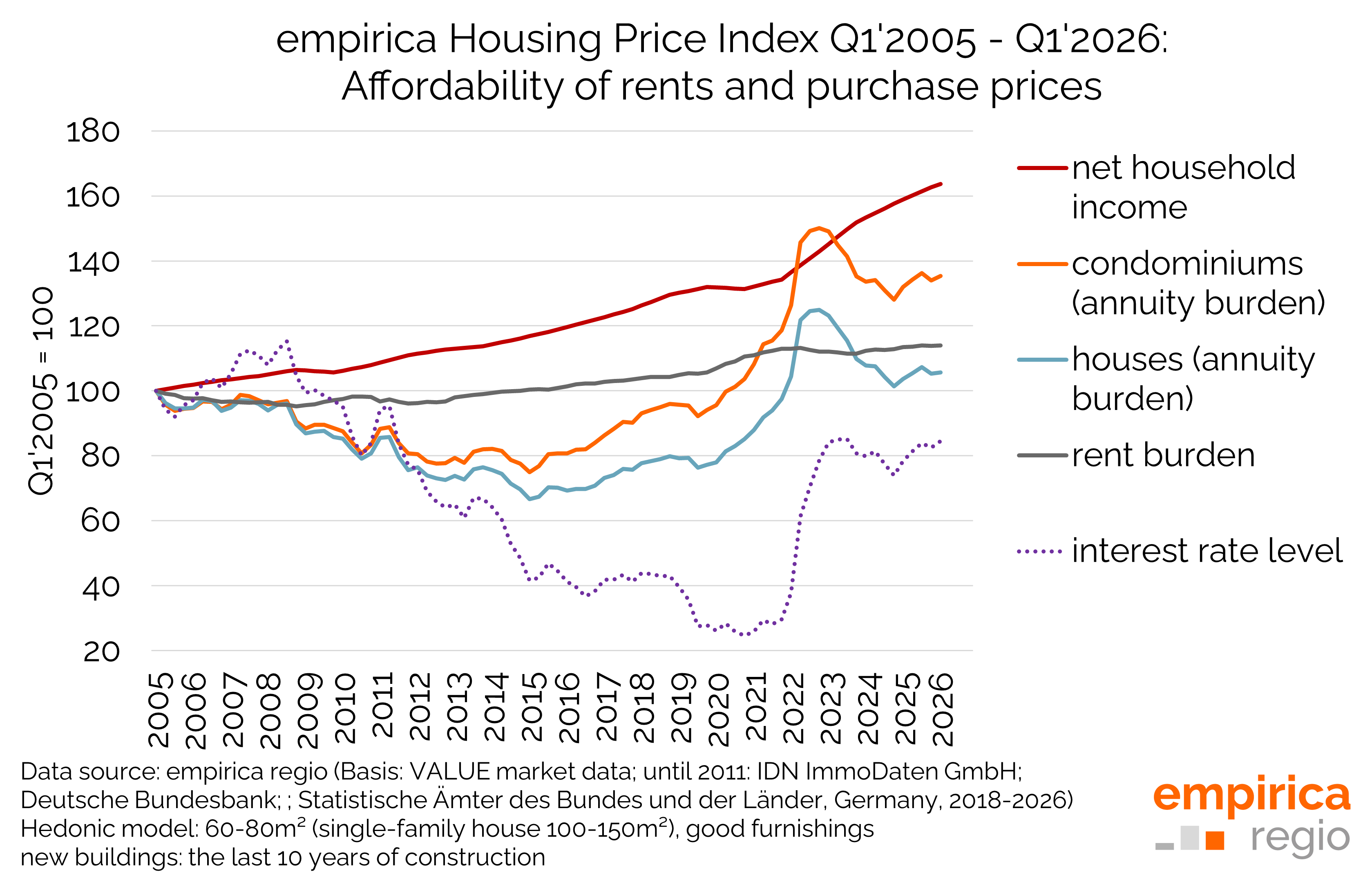
We already experienced the consequences of rising interest rates in 2022: loans become more expensive, demand shrinks, prices for existing properties collapse. But the real bad news hits new construction. Here it is not prices that are falling, it is realisation that is collapsing (“Doch die wahren Hiobsbotschaften treffen den Neubau. Hier sinken nicht die Preise, hier bricht die Realisierung ein”). Quite simply, even less is being built.
As a result, the shortage escalates in a market that is already undersupplied. Because prospective owners can no longer afford the financing, they are involuntarily pushed into the rental market and block it even further. Without new construction there is no relief – the housing market freezes up completely.
Policymakers would have to take countermeasures immediately. The instruments have been on the table for a long time: a substantial special depreciation allowance for rental housing construction and exemption from real estate transfer tax for first-time buyers. In addition, the EH55 energy efficiency standard must once again be permanently eligible for subsidies. But besides tax relief, what is lacking above all is the will to build – in politics, in many public authorities and among too many citizens who oppose new projects.
It is to be feared that, once again, none of this will happen. Berlin provides the negative showcase. There, ideologues and populists are gaining the upper hand with costly sham solutions. The bill is paid by those looking for housing, whose frustration grows from quarter to quarter.